
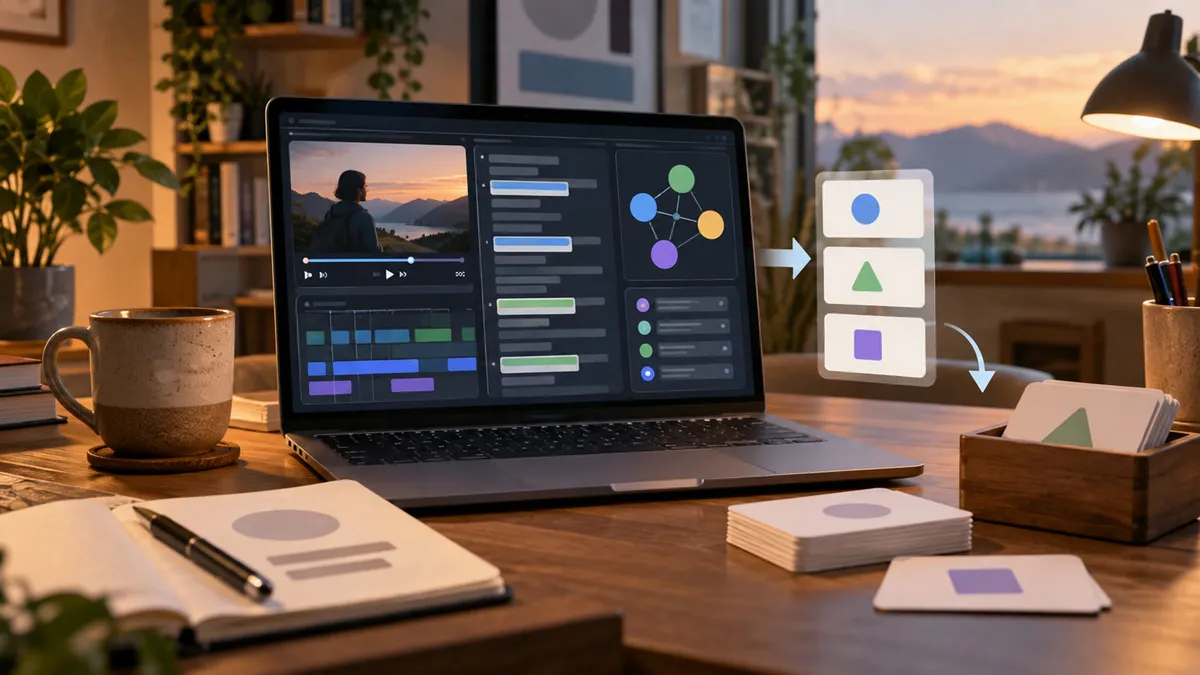
The KIKUGO vs asbplayer decision is really a choice between control and friction. asbplayer is a powerful free stack for subtitle mining. KIKUGO is a focused Netflix workflow for Japanese learners who want sentence explanations and Anki cards without assembling the system themselves.
Both can support sentence mining. The difference is how much setup you are willing to carry before the habit becomes sustainable.
Quick verdict
| Need | Better fit |
|---|---|
| Free open-source subtitle mining | asbplayer |
| Local files and external subtitle control | asbplayer |
| No dictionary or AnkiConnect setup | KIKUGO |
| Full Japanese sentence explanations | KIKUGO |
| Fast Netflix-to-Anki routine | KIKUGO |
For a detailed breakdown of the classic stack, read asbplayer + Yomitan + Anki vs KIKUGO. If you are searching from the replacement angle, read Best asbplayer Alternative for Japanese Sentence Mining. This page is the shorter direct comparison.
What asbplayer does well
asbplayer is popular because it gives serious learners control. You can work with subtitle files, capture lines, connect to Anki, and build a custom mining setup around your own preferences.
If you like tuning your workflow, that is a strength. You can pair it with Yomitan, customize note types, and mine from sources beyond Netflix.
But the setup is real. You may need external subtitles, dictionary imports, AnkiConnect, card templates, hotkeys, and a little patience when things drift out of sync.
Where KIKUGO is simpler
KIKUGO removes the wiring. You open Netflix, turn on Japanese subtitles, click a line, and get an explanation of the full sentence. If the line is useful, you save it and export later.
That makes it a better fit for learners who already know their main source: Japanese Netflix. The point is not maximum flexibility. The point is keeping the Netflix to Anki loop alive when motivation is normal, not heroic. The Netflix Japanese subtitles extension page walks through the workflow, and the Japanese Netflix tools guide lists the other setups. If you are moving off a subtitle-to-Anki generator, see the subs2srs alternative guide.
Word lookup vs sentence explanation
The asbplayer stack often depends on a dictionary layer such as Yomitan. That is excellent for word meanings, readings, and pitch accent.
Japanese subtitles often need more than word meanings. A line can be difficult because of omitted subjects, particles, contractions, slang, or context. KIKUGO focuses on the full sentence, which makes it closer to the method described in What Is Sentence Mining?.
You can still use both. Many learners use a dictionary for reading and KIKUGO for Netflix sentence mining.
Which should you choose?
Choose asbplayer if you want a free, flexible system and you are happy configuring the pieces.
Choose KIKUGO if you mostly watch Netflix and want the shortest path from a subtitle line to an explained, saved, reviewable card.
For the broader extension landscape, see Best Netflix Extension to Learn Japanese.
Then test the workflow directly: install KIKUGO, mine five subtitle lines from one episode, and compare that to the time you spend maintaining your current stack.
FAQ
Is KIKUGO better than asbplayer? KIKUGO is better if you want a simple Netflix-focused workflow with full-sentence explanations and Anki-ready export. asbplayer is better if you want a free, flexible, power-user subtitle mining stack across more video sources.
Do I need Yomitan with KIKUGO? No. KIKUGO explains full Netflix subtitle lines without requiring Yomitan, dictionary imports, or AnkiConnect. Yomitan can still be useful for reading web pages outside Netflix.
Why do learners use asbplayer? Learners use asbplayer because it gives deep subtitle control and can work with Anki and local subtitle files. The trade-off is setup and maintenance, especially when combined with Yomitan and AnkiConnect.