
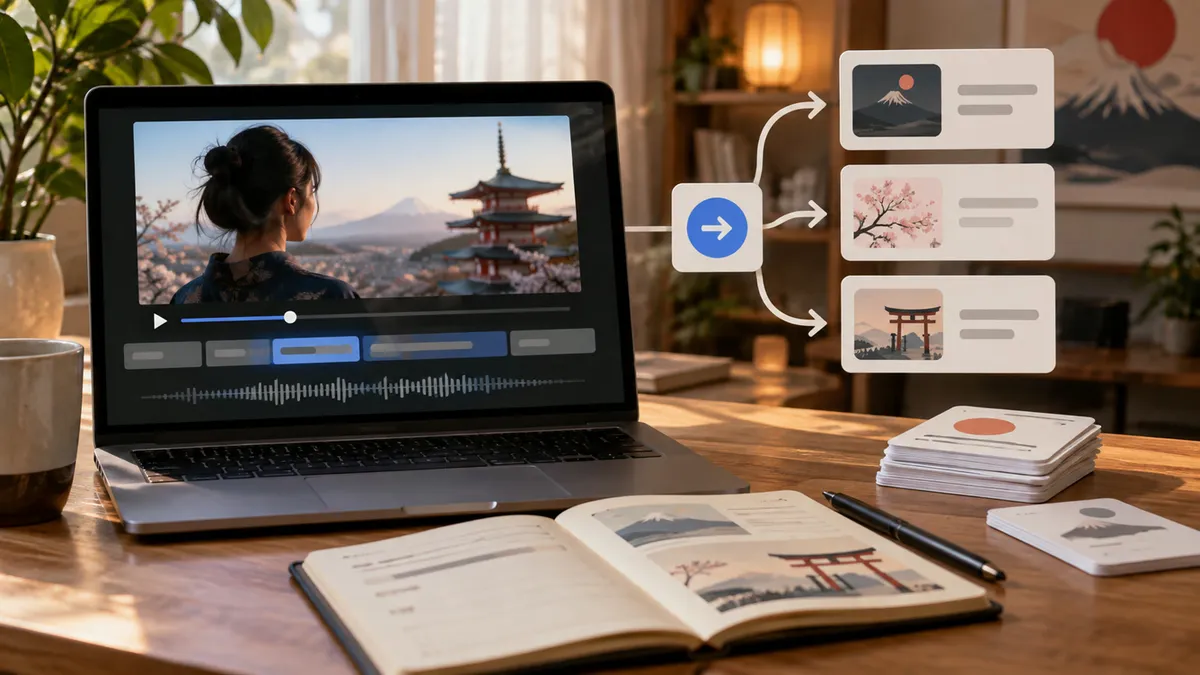
An asbplayer alternative should not simply copy asbplayer. It should solve a different version of the same problem: turning Japanese video into useful review without losing the habit to setup work.
asbplayer is powerful because it gives learners control over subtitle files, timing, card creation, and custom workflows. KIKUGO is intentionally narrower: Japanese Netflix subtitles, sentence explanations, and Anki-ready cards with as little setup as possible.
For the direct comparison, read KIKUGO vs asbplayer. For the full classic stack, see asbplayer + Yomitan + Anki vs KIKUGO.
Short answer
| Need | Better fit |
|---|---|
| Free open-source subtitle mining | asbplayer |
| Local video files and custom subtitles | asbplayer |
| Precise subtitle timing control | asbplayer |
| One-click Netflix sentence explanations | KIKUGO |
| Anki-ready Netflix cards with low setup | KIKUGO |
If you want maximum flexibility, asbplayer is the stronger tool. If you want the shortest path from a Netflix line to an explained card, KIKUGO is the stronger asbplayer alternative.
Where asbplayer wins
asbplayer is excellent for learners who like building their own stack. It can work with local files, external subtitle files, streaming video, AnkiConnect, and dictionary tools such as Yomitan.
That control matters if your immersion library is not mainly Netflix. If you mine downloaded video, custom subtitle tracks, YouTube exports, or shows with subtitles you manage yourself, asbplayer gives you room to tune the workflow.
The cost is maintenance. You may need subtitle files, offset adjustments, dictionary lookups, AnkiConnect setup, and card field decisions before the routine feels smooth.
Where KIKUGO wins
KIKUGO removes the wiring for the Netflix use case. You click a Japanese subtitle, get a full-sentence explanation, save it, and export later.
That is less flexible, but more repeatable. The goal is not to handle every video source. The goal is to make one common routine feel light enough to do after work, during a normal episode, without turning the session into tool maintenance.
If you are building a Netflix Japanese subtitles Anki deck, that focus matters more than a long feature list.
The real decision
Choose asbplayer if your media sources are broad, your setup patience is high, and you want free tooling you can configure deeply.
Choose KIKUGO if your media source is Netflix and your current sentence-mining stack produces more setup sessions than saved cards.
For a wider comparison of Netflix tools, use Best Netflix Extension to Learn Japanese or the full Japanese Netflix tools guide.
Try the one-week test
Use your current stack for one episode and count the cards you actually keep. Then install KIKUGO, mine one episode during the free trial, and compare saved cards, time spent configuring, and how likely you are to repeat it tomorrow.
FAQ
What is the best asbplayer alternative for Japanese Netflix? KIKUGO is a strong asbplayer alternative if you mostly mine from Netflix and want sentence explanations plus Anki-ready export without managing subtitle files, AnkiConnect, or dictionary fields.
Is asbplayer better than KIKUGO? asbplayer is better for free, flexible, power-user subtitle mining across local files and streaming. KIKUGO is better for a focused Netflix workflow with less setup.
Can I use asbplayer and KIKUGO together? Yes. Use asbplayer for local files or custom subtitle workflows, and KIKUGO when you want quick Netflix subtitle explanations and saved cards.