
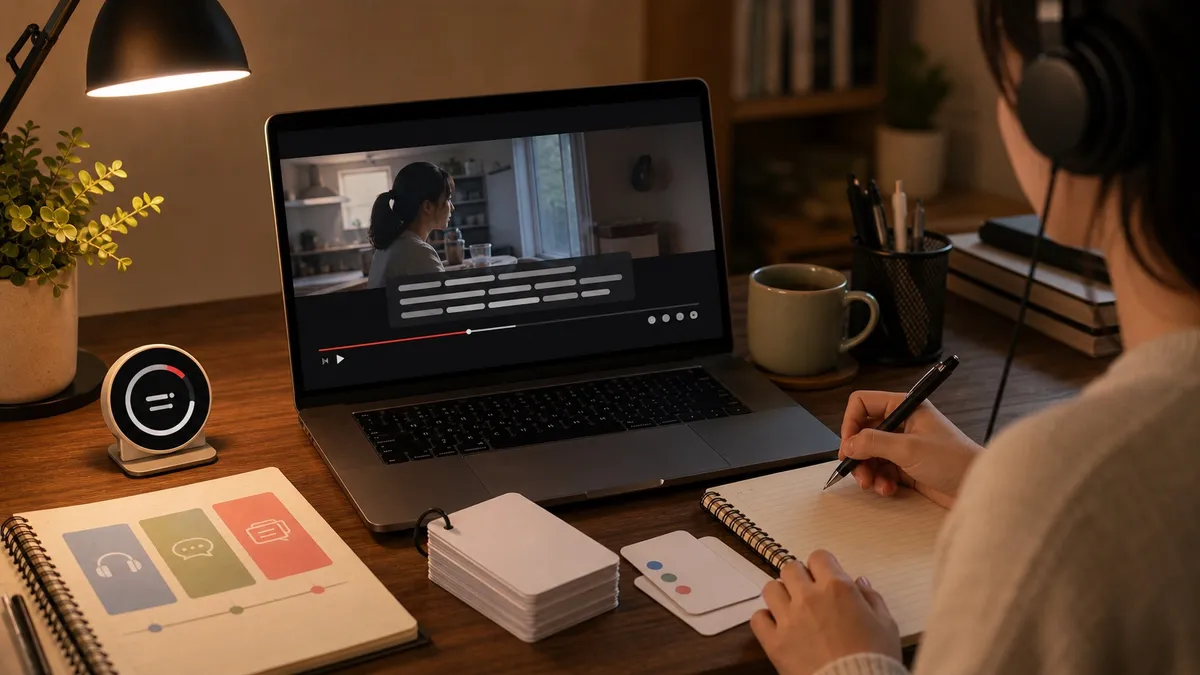
Japanese listening practice Netflix US works when the session has a clear job. Some days you listen for gist. Some days you replay hard lines. Some days you mine a few sentences. Mixing all three at once can make the episode feel heavy.
Use Japanese Listening Practice with Subtitles, follow the 30-day Netflix Japanese learning routine, use Japanese shadowing with Netflix when you want pronunciation practice, or see the full Japanese listening practice guide for the complete method.
Best Answer
Do three short Netflix sessions per week: one for relaxed listening, one for replay and subtitles, and one for saving review cards. Keep each session small enough that you will repeat it next week.
| Day | Focus |
|---|---|
| Session 1 | Watch for gist |
| Session 2 | Replay hard lines |
| Session 3 | Save 5-10 cards |
| Review day | Export or review cards |
Why This Works for US Learners
The US catalog can be useful, but your routine matters more than the exact show. A consistent weekly loop beats a perfect watchlist that you never open.
KIKUGO fits the third session. When a line stands out, click it, understand it, and save it. Then use Netflix Japanese Flashcards and the learn Japanese with Netflix guide to turn listening into review.
Install KIKUGO and use it for one focused listening session this week.
FAQ
How should I practice Japanese listening on Netflix US? Use short sessions, replay difficult lines, keep Japanese subtitles on when available, and save only the phrases you want to review.
How many Netflix lines should I save per session? Five to ten strong lines is enough for most learners. Saving too many lines turns listening practice into admin work.
Can KIKUGO support listening practice? Yes. KIKUGO helps you understand lines you hear, save them as cards, and review them after the episode.